
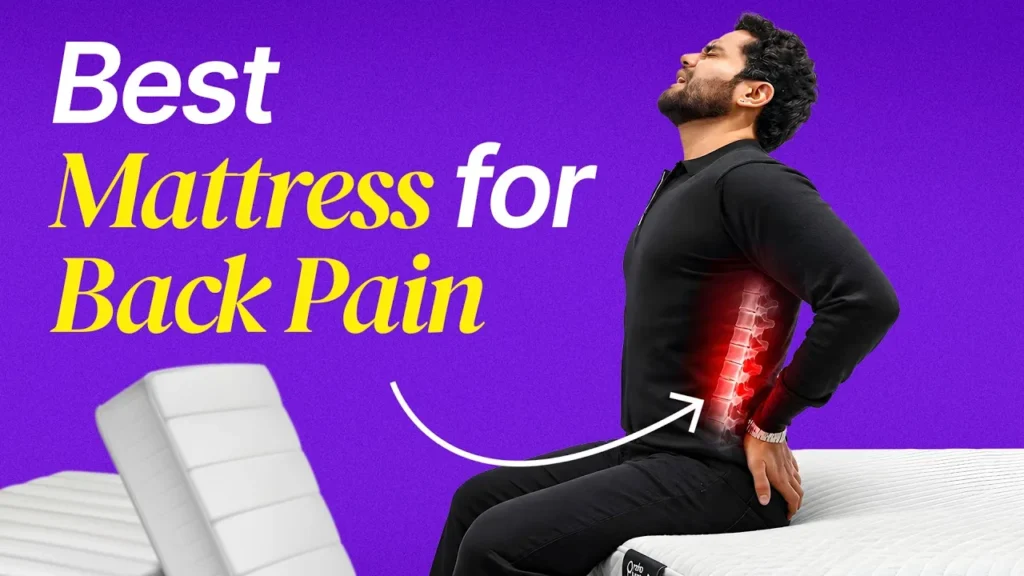
Best Mattress for Back Pain: What Actually Helps
If you’re waking up reaching for your lower back before you’ve even gotten out of bed, you’re not imagining it — and you’re not alone. Even people who work out regularly and eat well can end up with morning back pain that has nothing to do with fitness and everything to do with what they’re sleeping on. It’s a strange thing to accept: you can do everything right during the day and still wake up feeling like your body has aged a decade overnight, simply because of eight hours spent on the wrong surface.
Physiotherapists consistently point to the same culprit when patients bring up unexplained morning back pain: for a large share of people, the mattress itself is the actual problem, not their posture, their workouts, or their age. Once you start looking into it, the pattern becomes obvious — and fixable.
Here’s what actually matters when you’re choosing a mattress — by weight, sleeping position, and budget — plus a simple way to cut through the coil-vs-memory-foam-vs-latex-vs-hybrid confusion for good.
Firmness Is Not the Same as Support
This is the single biggest myth in mattress shopping, and it trips up almost everyone at least once. Firmness is how the surface feels the moment you touch it — hard or soft, that first impression you get pressing your palm into it in a showroom. Support is something entirely different: how well the internal structure keeps your spine aligned once you’re actually lying on it for hours at a stretch.
A soft mattress can still support you well if its internal structure is right. A hard mattress can support you badly if it’s just flat and rigid with nothing meaningful underneath doing real work. This is exactly why “just get a hard mattress, it’s better for your back” is bad, oversimplified advice — rigidity by itself guarantees nothing.
Think of a mattress as a three-layer structure: a comfort layer on top that you feel first, a transition layer in the middle that stops you from sinking too deep into the support base, and a support base underneath that does the actual structural work. All three layers matter — not just how the top layer feels when you’re testing it in a store for thirty seconds.
The Medium-Firm Sweet Spot
Too soft, and your hips sink down further than the rest of your body, your spine bends into a U-shape over the course of the night, and pressure builds steadily in your lower back. Too hard, and your hips and shoulders get no cushioning at all, which misaligns your spine in the opposite direction — flat and rigid instead of curved.
Whether “medium-firm” is the right call for you specifically depends on two things: your sleeping position and your body weight, not personal preference alone.
- Back sleeper → medium-firm, latex or hybrid works well
- Stomach sleeper → firm will do the job
→ Wakefit ErgoTech EcoLatex Classic Mattress A natural latex mattress built specifically around ergonomic support and pressure relief — a solid fit for back sleepers looking for that medium-firm zone without going too soft or too rigid. Check price on Wakefit →
Remember: you’ll spend 7 to 8 hours a night on this thing, every single night, for years. A cheap mattress that gives you back pain isn’t actually cheap once you add up the physiotherapy sessions it eventually causes.
Pick Thickness By Your Weight
This is the detail most people skip entirely when mattress shopping, and it matters more than almost anything else on this list — more, honestly, than the exact material you end up choosing.
| Your Weight | Minimum Thickness |
|---|---|
| Under 60 kg | 5 inch |
| 60–80 kg | 6 inch minimum |
| Over 80 kg | 8 inch+ |
| Couples (combined weight) | 8 inch+ |
A mattress that’s too thin for your body weight will bottom out under you, meaning you effectively feel the hard base beneath the comfort layers — which defeats the entire purpose of the comfort layer existing in the first place.
Materials
Memory foam molds to your body’s shape and gives excellent pressure relief — the trade-off is that it traps heat, which matters a lot in Indian summers, especially in rooms without air conditioning running through the night.
Latex is naturally bouncy with airflow that keeps you cooler through the night — the trade-off is it’s heavier and typically pricier upfront compared to standard foam.
Pocket spring / hybrid gives a luxury-hotel feel with strong motion isolation — you won’t feel your partner move around or get up in the night — but springs wear out faster than foam or latex over the long run.
If your budget is tight but you still want latex’s benefits, a hybrid mattress with a latex comfort layer sitting over a coil base is generally the best all-round balance between cost and performance.
Four Mistakes to Avoid
- Deciding within a day or two. Your body takes 2 to 4 weeks to genuinely adjust to new support. Look for a 100-night trial — many brands offer real value here, and using the full window matters more than people realize.
- Assuming a mattress lasts forever. After 8 to 10 years, it’s time to replace it, regardless of how it still looks from the outside. Sagging often happens gradually enough that you stop noticing it yourself.
- Skipping a mattress protector. A waterproof, breathable protector roughly doubles the mattress’s usable life, and it’s one of the cheapest upgrades you can make relative to the mattress cost itself.
- Ignoring your pillow. A ₹50,000 mattress is wasted if you’re still using a pillow from a decade ago — the two work as a system, not independently.
Frequently Asked Questions
A useful test: notice whether your back pain is worse first thing in the morning and improves as the day goes on. Pain that’s worst on waking and eases with movement often points to the mattress; pain that builds through the day points more toward posture or activity.
Most quality mattresses last 8 to 10 years with regular use. Sagging, visible body impressions, or waking up more sore than you used to are all signs it’s past its useful life, even if the warranty period hasn’t technically ended.
No — this is one of the most common misconceptions. What matters is support and alignment, not firmness alone. A too-firm mattress can misalign your spine just as badly as a too-soft one, simply in the opposite direction.
The Verdict
Stop hunting for the softest or hardest mattress on the market — that framing was never the right question. Choose thickness based on your weight first, then prioritize a medium-firm hybrid or latex mattress if your budget allows it. Getting these two variables right solves more back pain than any single “miracle” material or marketing claim ever will.